A felatrèisce (the spinner)
“...Moreover all the women that were wise-hearted did spin with their hands”(Exodus 25:25).
The figure of the spinner, to whom one of the trulli at the Trulli Holiday Albergo Diffuso is dedicated, has always held a particular charm. Spinning wool is a craft that dates all the way back to biblical times.
But let us return to more recent times. Imagine, inside a trullo in Alberobello, a woman more than a century ago transforming an unshaped mass of raw wool into a thread to be worked with knitting needles or a crochet hook to create socks, sweaters, and undergarments - or, using a loom, to produce sheets, blankets, shawls, or rugs.

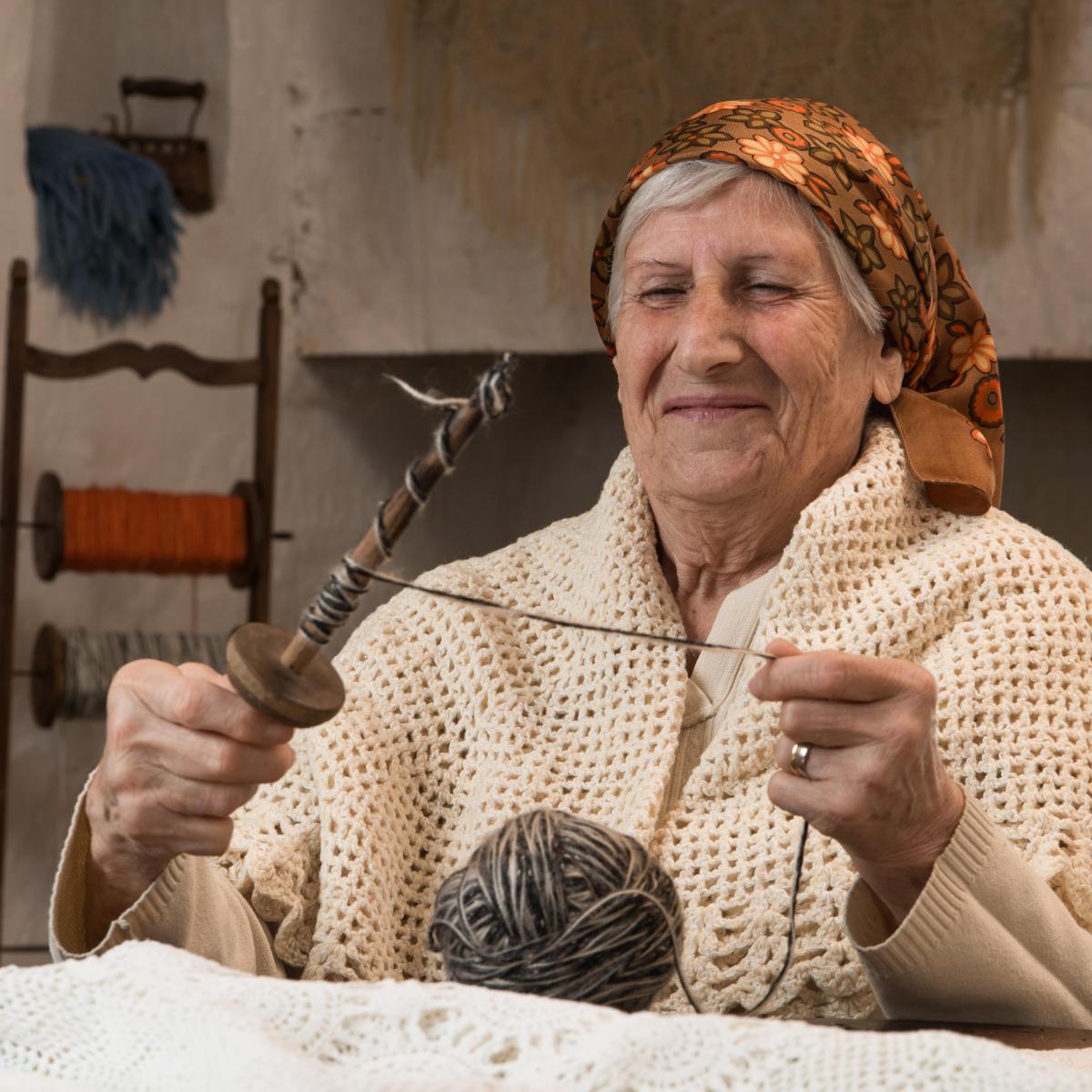
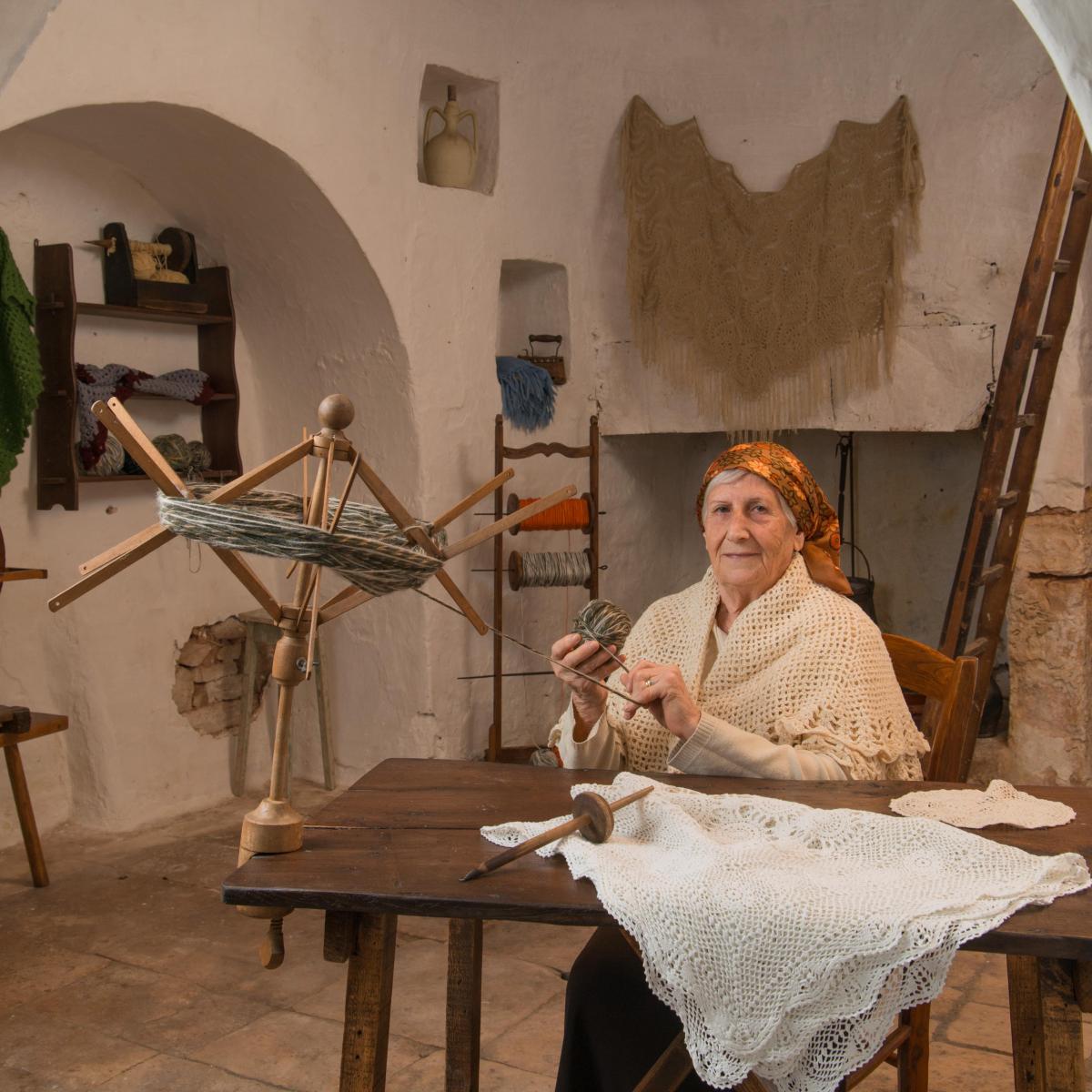
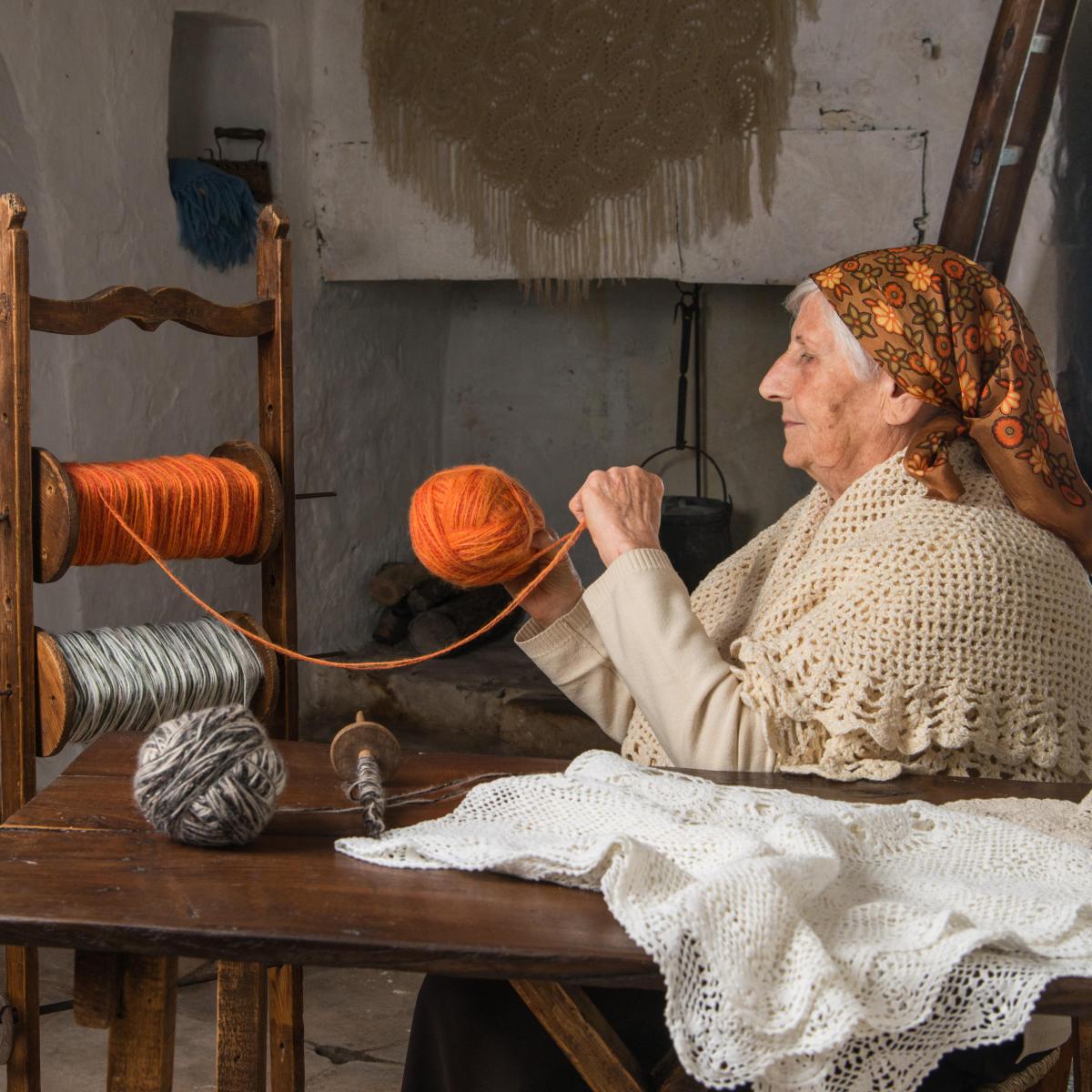
This work required knowledge passed down from mother to daughter, and it occupied much of the day, often meaning that children were left in the care of wet nurses or grandmothers. The woman spinning would hold a cane under her left armpit to keep it steady, while with the thumb and forefinger of her other hand, she would draw out a thread from a tuft of wool, working it with care and speed, winding it around the swift, before securing it to the spindle. The resulting balls of yarn were typically stored in wicker baskets, ready to be used to make sweaters, hats, blankets, shawls, and much more. Until just fifty years ago, hand-spinning wool was still so widespread that many women worked from home, gaining a double benefit: earning a little money while also producing the necessary garments for their families. Spinning was once considered a defining activity for a housewife who did not work in the fields. In civil records from the late 19th to early 20th century, a housewife was regularly listed as “spinner by profession.”
That time, however, is now truly gone. No woman in Alberobello spins by hand anymore, as all of these ancient crafts have been replaced by modern automatic industrial machines—faster in production, and more efficient in output.