U mèste trullêre (the master trullo builder)
Built entirely using dry-stone techniques, protected by UNESCO as part of the World Heritage List, and chosen as a holiday home by travelers seeking a unique experience: these are the trulli—the famous conical structures known worldwide that are hosting you right now.
Such distinctive structures require equally exceptional expertise. The mastro trullaro (master trullo builder) is the only artisan capable of constructing and restoring them. Creating a trullo is a kind of architectural miracle that demands rigor, profound knowledge of raw materials, and love for the tradition. Everything is done strictly by hand, shaping limestone rocks using the same techniques employed about 400 years ago.
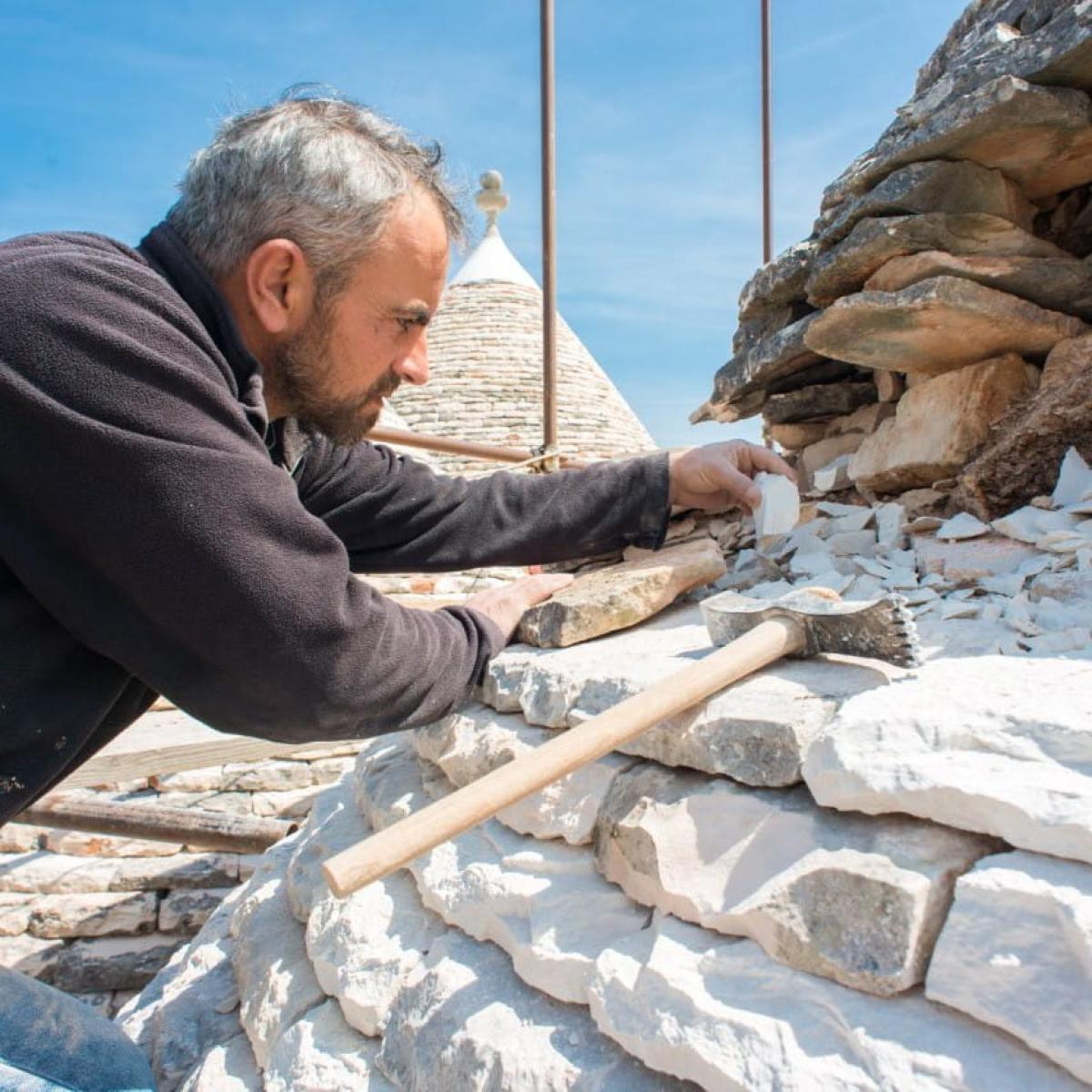
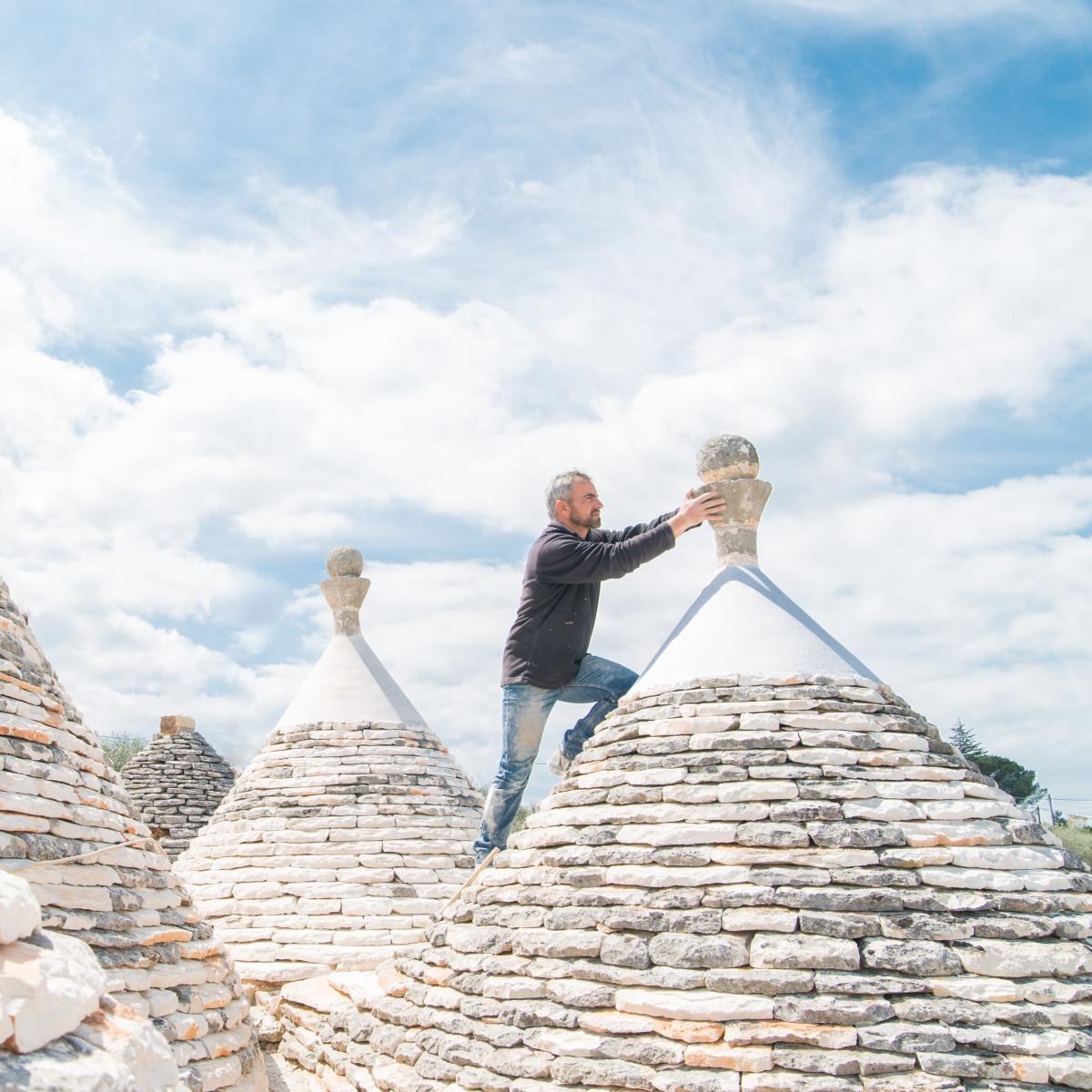
The master starts building the trullo laying out a circle (or a square) on the ground. Nearby, he digs a deep hole for a cistern to collect rainwater runoff from the roof, then begins stacking stones in increasingly tight concentric rings. The thick load-bearing wall consists of two parallel stone faces, with the gap between them filled with smaller stones and soil. The only part fully exposed to the elements - and which turns grey as a result - is the outer covering: the characteristic conical roof. This is made of elongated limestone slabs of varying thickness - known as chiancarelle, chiancole, or chianche - shaped with various types of hammers and laid without any binding agent. The cone is then capped with a pinnacle that surmounts the final courses, which are formed by smaller slabs. Although it is said that the trullo would collapse if the pinnacle were removed, the truth is that it is merely a decorative element.
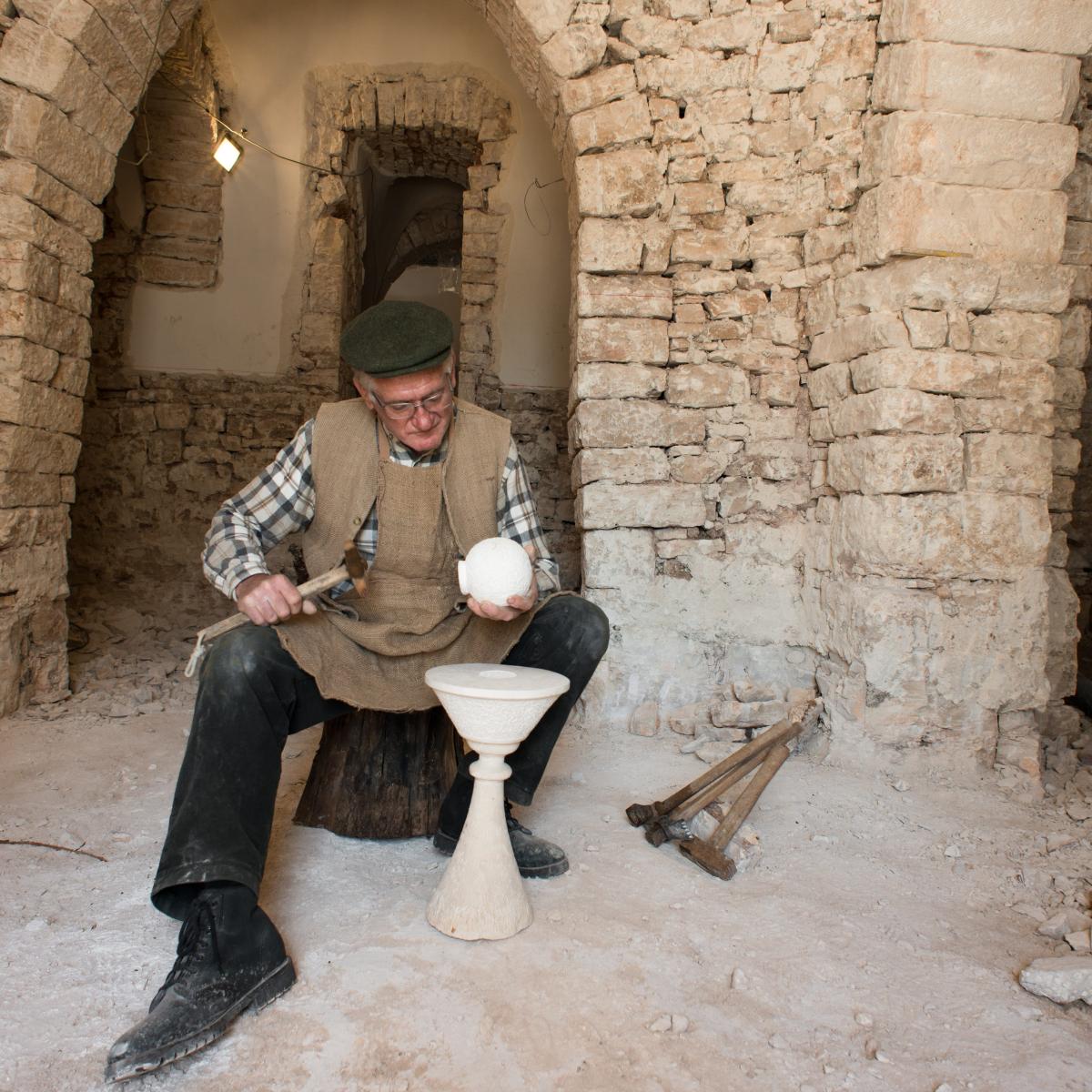
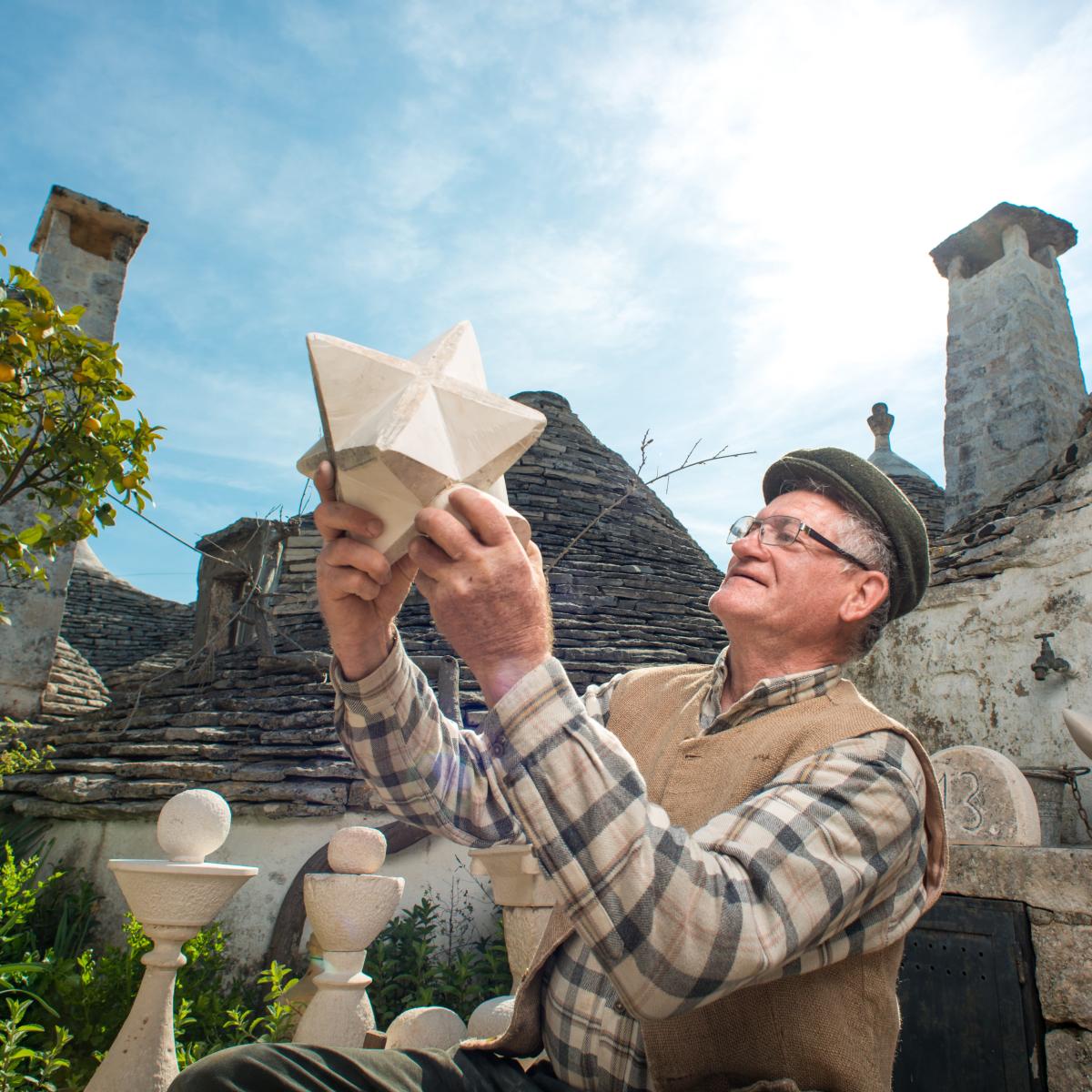
Even today, the mastro trullaro (master trullo builder) has an important role: reviving the historical and cultural value of our trulli. Did you know that he still uses the very same tools? UNESCO has decreed that renovations must respect the original trullo as much as possible, preserving its specific dimensions and imperfections. Every trullo is a unique, one-of-a-kind work of art.
We wanted to pay tribute to the ancient craft of the mastro trullaro by displaying the original tools he used inside this trullo. The two metal hods placed on the floor were used to gather and transport stones. Once filled, they could also serve as a practical work aid—acting as a pedestal or a convenient rest for larger stones, making them easier to shape and work with.
On display in the glass case are:
- chisels, accompanied by the mallet used to strike them and work the stone;
- a pulley, used to hoist and lower buckets and hods;
- twine - almost as thick as a rope - used as a guide line to ensure the walls and chiancole (limestone roofing slabs) remained aligned;
- plumb bobs, hanging in the case, which served as guides to check the structural alignment;
- rings, which were attached to the inside of the trullo’s conical roof and used to hang local produce - such as tomatoes - to dry;
- carpenter’s hammers, used for driving in and removing nails. Among these, one of the oldest tools served an additional purpose: it was used to clean the stones and the joints;
- two pointed hammers, used to level and work the stone surfaces;
- a stone-breaking hammer;
- a six-toothed hammer, specifically used for working chiancole - the distinctive stone slabs that make up the exterior of the trullo;
- two large hammers, hung on the wall, used for splitting stones and shaping them as desired.
These are simple, essential tools born of necessity and experience; together, they tell the story of knowledge handed down through time - a craft defined by precision, manual skill, and a profound understanding of stone. Like the other trulli in this scattered hotel - each dedicated to a traditional trade from Alberobello’s past - this space offers a genuine connection to local history. Yet here, history is not merely something to observe: the trullo remains a living space, allowing guests to stay amidst the very stones and tools that recount the ancient work of those who, generation after generation, shaped this special place.